The Happier Life Project
The Happier Life Project is the official podcast from My Possible Self, the award-winning, free mental health and wellness app partnered with The Priory Group, supporting hundreds of thousands of users worldwide.
Life comes with stress, setbacks, and overwhelming pressures. Each week, journalist and broadcaster Gabby Sanderson sits down with world-leading psychologists, bestselling authors, and inspiring voices in wellness to unpack the challenges we all face. Together, they share simple, science-backed tools and actionable strategies to help you feel calmer, stronger, and more resilient.
Expect powerful, thought-provoking conversations on everything from managing anxiety and perfectionism, to setting boundaries, finding balance, and rediscovering joy.
🎙️ Main episodes drop every Tuesday, with bonus episodes every Friday.
If you’re ready for practical advice, honest stories, and expert guidance to help you live a happier, healthier life; hit play and join us.
Listen on:








Episodes
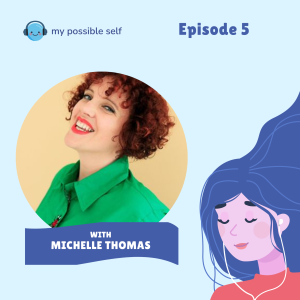
Tuesday Oct 15, 2024
Tuesday Oct 15, 2024
Writing provides a safe space to delve into our thoughts and emotions, explore our relationships, and reflect on our life stories, dreams, and aspirations. It serves as a powerful tool for making sense of our experiences, allowing us to navigate and overcome trauma while facilitating personal growth and change.
Writing therapy, often referred to as journal therapy, is exactly what it sounds like: using writing, typically in a journal, for therapeutic benefits. This approach is low-cost, easily accessible, and incredibly versatile. It can be practiced individually, guided by a mental health professional, or even in a group setting with discussions centered around writing. Additionally, it can serve as a supplement to other forms of therapy.
In this episode of The Happier Life Project, host Gabby Sanderson welcomes back bestselling author Michelle Thomas, known for her book 'My S**t Therapist & Other Mental Health Stories'. Together, they delve into the transformative power of writing as a therapeutic tool.
What to expect... Michelle talks about her passion for writing about mental health and her commitment to incorporating and amplifying others’ stories. She explains how writing has become a vital tool in her self-care toolkit and why it can be a healing resource for everyone, regardless of their writing ability.
During the conversation, Michelle also gives listeners a glimpse into her upcoming book, set to explore the often-overlooked subject of regret, set for release in 2025. While keeping most details under wraps, Michelle hints at how regret plays a significant role in our emotional landscape and can actually serve as a powerful tool for reflection and personal growth.
Gabby and Michelle also discuss the challenges of finding a good therapist and the lessons learned from difficult experiences. Plus, they consider Prince Harry’s suggestion to rename 'mental health' as 'mental fitness'—is it just semantics, or could it represent a significant shift?
Through the act of writing, we can discover our unique voices and gain deeper insights into ourselves. Whether journaling, composing poetry, or simply jotting down thoughts, the written word empowers us to confront our challenges and embrace our journeys. In a world that often feels overwhelming, writing can be a transformative practice that nurtures our mental well-being and enhances our understanding of ourselves.
Whether you're a seasoned writer or just curious about the healing process of writing, this episode offers valuable insights and inspiration. Grab your favourite notebook or simply settle in for an uplifting conversation.
To download the My Possible Self app: https://mypossibleself.app.link/podcastTo follow My Possible Self on Instagram: https://www.instagram.com/mypossibleselfTo follow Michelle Thomas on Instagram: https://www.instagram.com/msmthomas/To purchase Michelle's book 'My S**t Therapist': https://amzn.eu/d/gy647BV
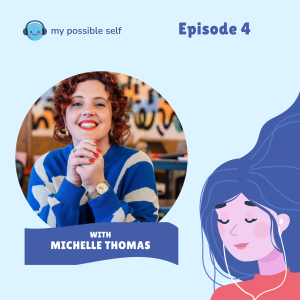
Tuesday Oct 08, 2024
Tuesday Oct 08, 2024
In the first of two episodes with best-selling author Michelle Thomas, host Gabby Sanderson explores how small, everyday moments can bring joy, healing, and comfort. From the soothing ambiance of coffee shops to the therapeutic calm of spending time with animals, this episode highlights some subtle yet powerful ways to nurture mental wellness.
Michelle Thomas’ first book, 'My S**t Therapist and Other Mental Health Stories', is a raw, heart warming, and sharp-witted exploration of life with mental illness. The book topped the Audible charts, surpassing Michelle Obama and J.K. Rowling to claim the number one spot; and to coincide, Michelle also hosted a podcast under the same name, available on all major platforms.
Gabby and Michelle discuss the mental benefits of cozy coffee spots, the pure pleasure of getting lost in a good book, and the surprising solace found in spending time with animals, like feeding baby goats! Michelle’s candid take on mental health and her personal journey has resonated with many, and in this episode, she shares insights on why these simple acts of self-care can be just as impactful as traditional therapy.
Michelle and Gabby also talk about the importance of finding the right job for you and your wellbeing. And share stories how they both walked away from fancy job titles and companies with kudos, to pursue doing what they love and maintaining a healthier work life balance.
In part one with Michelle Thomas, discover the power of small, everyday joys in nurturing mental health, and how they may be the unsung heroes of our healing process. Grab your favorite cup of coffee or tea and settle in for a chat that will leave you rethinking the simple, soothing moments in your life... Plus, don’t forget to tune in next week for part two, where Gabby and Michelle dive deeper into therapy experiences and the healing art of writing!
To download the My Possible Self app: https://mypossibleself.app.link/podcastTo follow My Possible Self on Instagram: https://www.instagram.com/mypossibleselfTo follow Michelle Thomas on Instagram: https://www.instagram.com/msmthomas/To purchase My S**t Therapist book: https://amzn.eu/d/gy647BV
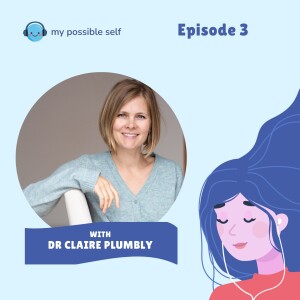
Tuesday Oct 01, 2024
Tuesday Oct 01, 2024
Burnout is a deep state of emotional, physical, and mental depletion that stems from prolonged stress, often related to work or overwhelming personal demands.This exhaustion deeply impacts your overall well-being, leading to chronic fatigue, trouble concentrating, irritability, emotional numbness and feeling unable to cope.
Too many of us soldier on, operating on high levels of stress, pressure and worry until something drastic happens to make us stop and slow down. Pushing too hard on ourselves, we wear busyness as a badge of honour and grapple with feelings of guilt if we are not maximising our productivity.
Dr Claire, a Clinical Psychologist and Director of Good Therapy Ltd, a psychological therapy centre based online and in Somerset, specialises in trauma related issues. Her expertise includes anxiety, trauma, and burnout. Dr Claire’s debut book ‘Burnout: How to Manage Your Nervous System Before It Manages You’ offers strategies for recognizing and addressing burnout by managing your nervous system, despite the persistent demands of modern life.
In this episode of The Happier Life Project, Dr Claire discusses both the common and less obvious signs of burnout, as well as the severe consequences of pushing through it for too long. Additionally, Dr. Claire and host Gabby explore how overworking has become normalized in today’s society, examining the cultural, societal, and internal pressures that drive us to stay constantly on the go. The burnout expert also suggests some practical strategies for maintaining balance in our ever-demanding world.
Discover critical insights and practical advice to help you navigate and mitigate the effects of burnout in your life and please leave a review on one of the podcast platforms if you resonated with this conversation and have something you would like to share.
To download the free My Possible Self app: https://mypossibleself.app.link/podcastTo follow My Possible Self on Instagram: https://www.instagram.com/mypossibleselfTo follow Dr Claire Plumbly on Instagram: https://www.instagram.com/drclaireplumbly/To follow Dr Claire Plumbly on Linkedin: https://www.linkedin.com/in/drclaireplumbly/Dr Claire’s Website: www.drclaireplumbly.comTo buy Dr Claire’s Burnout book: www.drclaireplumbly.com/burnout-book.
*Dr Claire’s book will be available in the USA under the title ‘The Trauma of Burnout’ from 23rd January 2025.
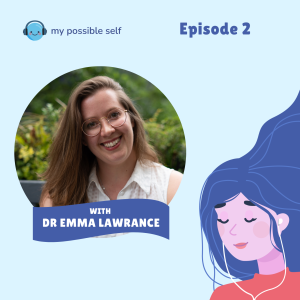
Tuesday Sep 24, 2024
Tuesday Sep 24, 2024
In this episode of The Happier Life Project, we explore the powerful connection between climate and mental health, examining how the climate crisis impacts our emotional well-being and the vital role a healthy planet plays in maintaining our mental health. Terms like ‘eco-anxiety,’ ‘environmental doom,’ ‘ecological grief,’ and ‘eco-guilt’ capture the psychological toll that environmental degradation and climate change are having on individuals and communities worldwide. This is why caring for the climate is so deeply intertwined with caring for our own mental health and the well-being of our communities.
Dr Emma Lawrance leads the Climate Cares Centre, where she collaborates with diverse experts to explore the connections between climate change and mental health, including through the Connecting Climate Minds global initiative. As the Mental Health Innovations Fellow at the Institute of Global Health Innovation, Emma directs the mental health strategy, focusing on digital mental health support and the Climate Cares program. With degrees in physics, chemistry, science communications, and neuroscience, Emma is passionate about the outdoors, especially in her native Adelaide Hills.
This conversation emphasizes the urgent need to protect our planet - not just for its sake, but for the essential role it plays in protecting our well-being. Dr Emma joins host Gabby to explore the emotional challenges of navigating a changing world. Together, they discuss how we can better educate ourselves and offer compassion to those affected.
Tune in to discover the deep connection between a healthy planet and a healthy mind, and the small, meaningful actions we can take to help slow the climate crisis, and foster healing for the Earth... and therefore ourselves.
To download the My Possible Self app: https://mypossibleself.app.link/podcastTo follow My Possible Self on Instagram: https://www.instagram.com/mypossibleselfConnecting Climate Minds Global Online Hub: hub.connectingclimateminds.orgClimate Cares Twitter: @ClimateCaresClimate Cares LinkedIn: https://www.linkedin.com/company/climate-cares-imperial-college-london/Climate Cares website: https://www.imperial.ac.uk/climate-cares/Dr Emma Twitter: @Emma_L_LawranceDr Emma LinkedIn: https://www.linkedin.com/in/emma-lawrance-5a93b468/
Tuesday Sep 17, 2024
Tuesday Sep 17, 2024
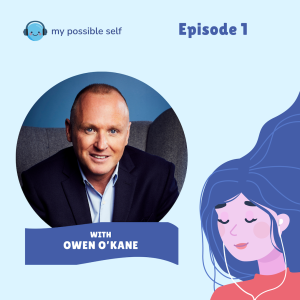
Season 3 of The Happier Life Project kicks off with the return of renowned psychotherapist and best-selling author, Owen O’Kane. Known for his transformative books, including ‘Ten to Zen’, ‘Ten Times Happier’, and ‘How to Be Your Own Therapist', Owen shares practical strategies for managing anxiety, stress, and other mental health challenges.
In this episode, Owen delves into the powerful role of personal storytelling in mental health. He explains how sharing your experiences with trusted loved ones can facilitate emotional release, foster resilience, and combat stigma. Drawing from his book ‘How To be Your Own Therapist’ Owen offers some simple entry points into accessing the therapist in you, emphasising the importance of owning and making peace with your story as the first step in self-therapy.
With over 25 years of experience, including his role as a former NHS Mental Health Clinical Lead, Owen brings a wealth of knowledge and advice to this discussion. Tune in to learn how to unlock better mental health and continue your journey toward a happier, healthier, more balanced life.
To download the My Possible Self app: https://mypossibleself.app.link/podcastTo follow My Possible Self on Instagram: https://www.instagram.com/mypossibleselfFor all things Owen O’Kane: https://www.owenokane.com/To register for ‘A Life Less Anxious’ Owen’s 6-Week Anxiety Workshop starting on Monday 7th October 2024 @ 7pm UK time: https://www.alifelessanxious.co.uk/To follow Owen O’Kane on Instagram: https://www.instagram.com/owenokaneten
Tuesday Jul 30, 2024
Tuesday Jul 30, 2024
Emotional memories imprinted in our bodies can persist for years, impacting our physical and psychological well-being. Emotion tracking allows us to measure and assess our emotional states over time, serving as a valuable tool for both individuals and therapists to monitor mood and feelings. However, when difficult emotions repeatedly resurface, the challenge becomes breaking this cycle, freeing ourselves from triggers, and resolving the root of the problem.
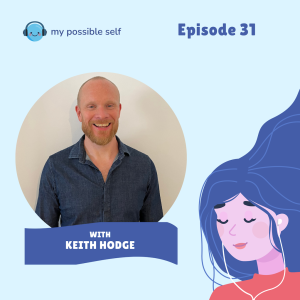
Keith Hodge is an international healer and the founder of Intuity International. Keith specialises in root healing, a system he designed to help clients address and heal the deepest layers that are obstructing them from living a fulfilling life. Keith firmly believes that by identifying and releasing long-held trapped emotions, individuals can move forward and build a life they love.
Keith is a highly qualified hypnotherapist, energy healer and has a degree in acupuncture. With years of experience running two clinics and seeing 20-25 people a week, Keith has consistently focused on what will make the biggest difference for his clients in the shortest time. This dedication led to the creation of the root healing system.
Tracing emotions bring the subconscious to light. Emotional tracing is a crucial resource for enhancing self-awareness, emotional regulation, and overall mental health. Keith's unique method follows the emotional trail, steered by the emotions his clients struggle with, rather than their memories, to reach the core wound.When the root of the emotion is brought to the surface, issues such as lack of confidence and self-esteem, anxiety, fear of judgement, relationship troubles, or problems combating boredom and procrastination become easier to address and resolve, and we are no longer ruled by our past experiences.
In the final episode of season two of The Happier Life Project podcast, Keith discusses with host Gabby Sanderson what led to the creation of his root healing system. He shares how his personal battle with chronic fatigue syndrome in his twenties shifted his path from a corporate career, to a journey of healing and exploration into alternative therapies.
Keith explains why he believes trapped emotions, without fail, lead to the root of most problems, and how these emotional wounds can hold us back. Keith also talks about some of the most common ‘presenting protections’ he sees in his clients, which are ways we have learned to cope or suppress difficult emotions.
Keith has facilitated training and retreats around the world including the United States, Europe, the UK, Indonesia, and online. Keith shares some examples of successful case studies plus, offers some simple entry points for exploring his method on your own.
The content of the podcast is for informational and educational purposes only and should not be considered as a substitute for professional or medical advice. The Priory Healthcare are not involved in the production or content of this podcast.
The Happier Life Project will return in September with Season 3 of the podcast.
To download the free My Possible Self App: https://mypossibleself.app.link/podcastTo follow My Possible Self on Instagram: https://www.instagram.com/mypossibleselfFor more information on Keith Hodge and Intuity International: https://intuityinternational.com/To explore Intuity International’s free programs: https://intuityinternational.com/free-toolsTo follow Intuity on Instagram: https://www.instagram.com/intuity_healing/
Tuesday Jul 23, 2024
Tuesday Jul 23, 2024
Mindfulness is the natural human ability to be completely present, fully aware of our location and actions, and not excessively reactive or overwhelmed by what’s happening around us. We all understand mindfulness can result in better mental health, but it can be challenging with the distractions of modern life. The human mind tends to wander and frequently gets lost in thoughts about the past or future, making it hard to stay present.
If you think practising mindfulness must involve being in a meditative state and include an activity such as breathwork, journaling or the raisin exercise (one of the most basic and widely used mindfulness methods which involves focussing your attention on each of your senses as you eat a raisin), today’s prestigious guest disagrees.
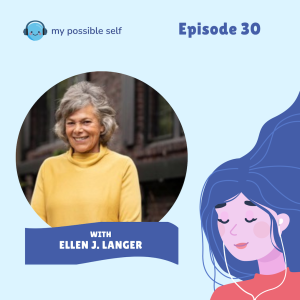
Ellen J. Langer is a distinguished professor of psychology at Harvard University. In 1981, she made history as the first woman to receive tenure in psychology at Harvard. Ellen’s lifetime of expertise and trailblazing research in the field of mindfulness focuses on the psychology of control, decision making, ageing, and mindfulness theory; which has led to numerous academic honours.
Ellen J. Langer is the author of eleven books, including the international bestseller 'Mindfulness', which has been translated into fifteen languages, and 'Counterclockwise: Mindful Health and the Power of Possibility'. Most recently, she is the author of 'The Mindful Body: Thinking Our Way to Chronic Health' which delves into the transformative potential of mindfulness for improving health. Dr. Ellen is also the author of more than 200 research articles and her revolutionary experiments in social psychology have earned her inclusion in The New York Times Magazine’s 'Year in Ideas' issue.
Ellen believes through her findings “we’re typically trying to solve today’s problems with yesterday’s solution” and “most of us are mindless, most of the time”. Meaning the limits we assume are real - are artificial - and that we don't have to accept them at all.
Talking to Gabby Sanderson, host of The Happier Life Project, Ellen shares the results of some of her groundbreaking studies. Demonstrating the power the mind has on the body and how what we believe, can be a self-fulfilling prophecy. Especially when it comes to our health and happiness. The renowned ‘mother of mindfulness’ explains why we must pay attention to context and variability, and not necessarily accept ‘the rule’ to anything. She also talks about how we can wake up and overcome mental laziness, therefore not succumbing to outcomes we are led to presume must be the one and only truth. Such as becoming more forgetful as we get older, or being unable to do something because of (insert belief)… As Ellen says in this conversation, “one plus one does not always equal two”.
So can we really defy the ageing process, or at least slow it down, just by just harnessing the power of belief? Can we think ourself more toned and fit, and even lose weight, by simply believing it?! Ellen's research and studies conclude the answer is yes. If we embrace the idea of mind-body unity, new possibilities for controlling our health become available to us.
To download the My Possible Self App: https://mypossibleself.app.link/podcastTo follow My Possible Self on Instagram: https://www.instagram.com/mypossibleselfFor more information on Ellen J. Langer and her work: https://www.ellenlanger.me/To follow Dr. Ellen Langer on Instagram: https://www.instagram.com/ellenjlanger/
Tuesday Jul 16, 2024
Tuesday Jul 16, 2024
Sometimes it can be difficult to admit we are lonely. Experiencing loneliness from time to time is a normal part of life; but when loneliness is severe, or persists over an extended period, it can have a detrimental impact on our mental health.
Some ways loneliness can be experienced are:emotional loneliness – a lack of emotional attachment to someone like a close friend or partnersocial loneliness – a lack of friends to go out with, or who share our hobbies or interestsexistential loneliness – a sense of being in a room of people you know and still feeling alone
According to the World Health Organization, loneliness is a pressing global health threat, heightened by the pandemic. Research has shown that severe loneliness poses the same health risk as smoking 15 cigarettes a day. And the demographic most affected by loneliness is not (as you might assume) the elderly, but 16 to 24 year olds.
We often discuss the emotional aspects of loneliness, such as feeling low, isolated or disconnected, but loneliness can also manifest through physical symptoms and affect our behaviour. For instance, you may get nervous about or avoid going to social events, change your daily routines, like stop cooking for yourself, caring about your appearance or getting up early, or you may find it difficult to get to sleep or stay asleep.
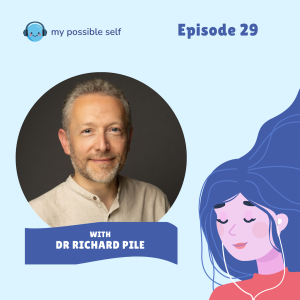
Dr Richard Pile is a GP specialising in lifestyle medicine and cardiology. Also an author, blogger, podcaster, mentor and coach, Dr Richard’s TedX talk titled ‘The Dangers of Loneliness’ offers an eye opening, research backed, insight into the physical and mental health consequences of prolonged loneliness.
Talking to host Gabby, Dr Richard defines loneliness, the causes and effects. The ‘Fit For Purpose’ author also discusses what signs to look out for, both within ourselves, and in others, that may indicate we are chronically lonely. Then he suggests practical steps towards forming new connections and reducing isolation.
Dr Richard stresses why nurturing the relationships and connections we already have is so important, and shares some ideas about how we might go on to find more people who are like-minded within our local community. Gabby and Dr Richard discuss the role loneliness plays in our mental health and how the two are so interlinked. Dr Richard also explains how finding purpose in our lives is a great antidote to feeling lonely and where to find our nearest 'social prescribers'. A free NHS service set up that connects people to activities, groups, and services in their community to meet the practical, social, and emotional needs that affect their health and wellbeing.
To download the My Possible Self App: https://mypossibleself.app.link/podcastTo follow My Possible Self on Instagram: https://www.instagram.com/mypossibleselfFor more information on Dr Richard Pile and his services: https://feelgoodforlife.uk/To watch Dr Richard’s TedX talk on Loneliness: https://youtu.be/sPsvOd-kwVU?si=dAIYYR_E_ukAhcyg
Tuesday Jul 09, 2024
Tuesday Jul 09, 2024
Long COVID, refers to a range of symptoms that persist for weeks or months after the acute phase of a COVID-19 infection has been resolved. At least 2 million people in England and Scotland say they are experiencing long COVID, with many reporting their symptoms have lasted two years or longer.
The figures released by the Office for National Statistics (ONS) cover the period from November 2023 to March 2024 and further breakdown that among those who reported having long COVID, approximately 1.5 million people - about three-quarters - felt their daily activities were impacted, while 381,000 people - about a fifth - said their ability to perform these activities was "severely limited."
One significant aspect of long COVID is its impact on mental health, contributing to a range of psychological and cognitive symptoms. Many individuals with long COVID report experiencing anxiety, depression, and post-traumatic stress disorder (PTSD). Insomnia, brain fog, memory problems and confusion are also extremely common. Studies have shown that these symptoms can be as debilitating as the physical symptoms of long COVID which include; chronic fatigue, frequent or severe headaches, persistent aches and pains in joints and muscles, shortness of breath, fever, nausea, digestive and bladder issues, skin rashes and heart palpitations.
Addressing these issues requires a multifaceted approach, including medical treatment, mental health support, and lifestyle modifications. Continued research and awareness are critical in managing and mitigating the mental health effects of long COVID. As is supporting our friends, colleagues and loved ones who are going through it.
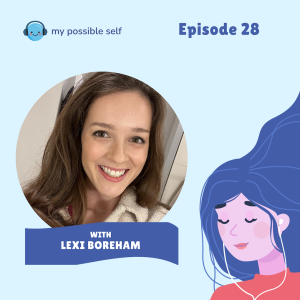
Lexi Boreham was a fit, healthy and active lawyer who in September 2022, at 29 years old, was struck down with long COVID. Lexi started sharing her recovery journey publicly on Instagram in May 2023, to create a safe space for those with long COVID to find comfort and community, and to raise awareness of the illness. Lexi openly vocalises the ups and downs of life with long COVID, including feelings of loneliness, frustration and sadness, but also the brief moments of hope and joy.
Talking to host Gabby, Lexi speaks candidly about what life has been like since becoming afflicted with long COVID. Lexi shares her own struggles with debilitating fatigue, how her mental health has been affected, and explains about the spectrum of the condition.
Lexi also talks about how her battle with long COVID has affected her family and loved ones, whilst offering advice on how we might show our support to anyone facing the challenges of long COVID. Lexi highlights what the most current research is providing and vocalises her frustrations with the flippant comments Rishi Sunak made, about those struggling to work due to chronic health conditions. Lexi also offers some words of hope and encouragement to anyone experiencing long COVID, whilst sharing what tools and resources she has found to be helpful in managing her own symptoms.
To download the My Possible Self App: https://mypossibleself.app.link/podcastTo follow My Possible Self on Instagram: https://www.instagram.com/mypossibleselfTo follow Lexi on Instagram https://www.instagram.com/positively_fatiguedTo follow Lexi on TikTok: www.tiktok.com/@positively_fatigued
To download the UCL resources pdf on long COVID referred to in the interview: https://www.ucl.ac.uk/covid-19-longitudinal-health-wellbeing/sites/covid_19_longitudinal_health_wellbeing/files/a-guide-to-long-covid-and-mental-health.pdf
Tuesday Jul 02, 2024
Tuesday Jul 02, 2024
The gut-brain connection is a two-way communication system between your gut and brain. It’s an intricate network of nerve cells, chemicals, and microbes and explains why your stomach produces juices when you think about food, and why stress can cause stomach cramps or a churning feeling. This connection links your central nervous system (CNS), including the brain, with the enteric nervous system (ENS) in your gut. Often referred to as the "second brain," the ENS significantly impacts (and creates a link between) gut health and mental health.
Phrases like "gut-wrenching" or "butterflies in the stomach" illustrate this connection further, as our digestive system responds to emotions such as anger, anxiety, sadness, nervousness and happiness. Consequently, gastrointestinal issues can both cause and result from stress, anxiety, or depression; demonstrating the close relationship between the brain and the digestive system.
So if we improve our gut health, we better our mental health. And in return, better mental health can alleviate certain digestive issues and lead to stronger gut health.
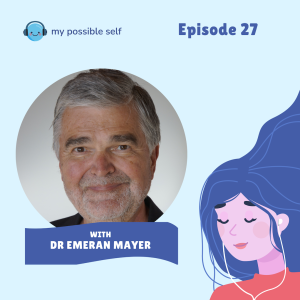
Dr Emeran Mayer is a leading expert on the mind-gut connection. A world renowned and award winning gastroenterologist, neuroscientist and Distinguished Research Professor in the Departments of Medicine, Physiology and Psychiatry at the David Geffen School of Medicine at UCLA, Dr Emeran has accumulated 35 years of research on the clinical and neurobiological relationship between the digestive system and the nervous system.
Dr Emeran is also a best selling author of the books “The Mind-Gut Connection”, “The Mind-Gut Immune Connection” and the recipe book “Interconnected Plates”. His work primarily explores the complex interactions between the gut and the brain, particularly how these interactions impact conditions like irritable bowel syndrome (IBS), chronic pain, and emotional well-being.
In this episode of The Happier Life Project, Dr Emeran simplifies how the brain and gut communicate. He discusses the influence food has on our emotions and expresses his frustrations with ultra-processed food suppliers, for producing harmful and addictive products. Dr Emeran also explains the science behind the Mediterranean diet as a model for optimal gut health and shares research on the benefits of following a restricted eating window. By not not having food in your stomach 24 hours a day, you allow your gut to cleanse itself of unwanted bacteria in the small intestine and activate its 'housekeeper' function.
To download the My Possible Self App: https://mypossibleself.app.link/podcastTo follow My Possible Self on Instagram: https://www.instagram.com/mypossibleselfFor more information on Dr Emeran Mayer and the mind-gut connection: https://emeranmayer.com/To follow on Dr Emeran Mayer on Instagram: https://www.instagram.com/emeranmayerAll links to Dr Emeran’s books, courses, masterclass and podcast: https://linktr.ee/emayer